component 2 - process log:
PROCESS LOG:
Week one:
Unfortunately, due to illness, I was unable to attend this week's session. Much of this session was becoming familiar with the cameras used, which I was inevitably unable to catch up on. I made sure to email the teacher as well as talk to friends about what was discussed. Going into this module, I had an awareness of how to use cameras as an owner of a canon camera myself.
Sussex direct had a week by week guide of which allowed me to familiarise myself with the activities discussed in class - this focused on the history of photography:
Listening to a podcast named 'In Our Time - The invention of photography' as well as a PowerPoint. named "histories of photography". Things I took away from the PowerPoint was:
- In general - photography and its relation to other topics such as magic, technology, and philosophy.


Week two:
- This week we were emailed a series of tasks that we were to complete for the week 2s session. Firstly, we were asked to read an article by Graham Clarke named "How do we read a photograph" in which the text entailed discussing photography as both a tool of division and unity in its ability to both capture moments accurately and provide a bias presentation of a series of events. The text focused on historical events such as war - this I found interesting.
- The next task we were asked to complete was to finish setting up a blog and also to collect a series of images that we found interesting and to discuss why that was. These were the images I found (these were inspired by the text I had read):
The images:

- I found this image interesting in its ability to both disguise and reveal information about a situation. The black and white photography reflecting the potential time at which it was taken as well as the mystery of the unfocused officers behind them. The main focus of the boy in front with the relation to the people behind o him remaining unknown positions us as unaware of what is going on. We are uncertain as to who is morally wrong in this situation and the innocence (or lack of) of the boy in focus. The stark facial expression captured in the main bit of the frame shows this picture is clearly taken to capture someone's pain. Because of this we also question the photographer's intention themselves which is heightened through the blindfold used too.

- I also found this image capturing a war setting. I found the contrast of the crumbling/ smoking land with the stance of the soldiers intriguing. Despite the people being in focus, the smog around them provides a sense of mystery. The fact that they are so high up positions them as powerless but the fact that they are in focus and are so dark does also suggest they have some sense of control.
- This week we were put into groups, having to match up pictures with the terms they reflected such as depth of field, exposure, and motion blur. Through doing this activity, I learned that there are 2 kinds of motion in photography, motion regarding the camera itself is moving and the other when the object in focus is moving.
- After this, we then went out and played with the cameras around campus. We played with the shutter speed and played with motion. An issue I came across when completing this activity was the camera settings being right, I found that focus was an issue because I wasn't very familiar with the cameras themselves.
- After completing this activity, we regrouped and looked through the images, I found that many of the images I had taken were in the wrong format and so had to delete them.
- After this, we then discussed the more theoretical side of the module such as exploring photography as a text looking at how we read in and explore meanings behind images.
Core readings:


Week three:
For this week's preparation, I had to research vernacular photography and present my research to the rest of the class.
Below is the research that I found:
Vernacular photography:
Vernacular photography is the photography of common things/ people/ objects - things you would find in everyday life.
Examples of vernacular photography include taking photos of things such as friends and family. Whilst conducting research about this, it was encouraged that we looked at its relevance in Brighton.
Examples of vernacular photography:
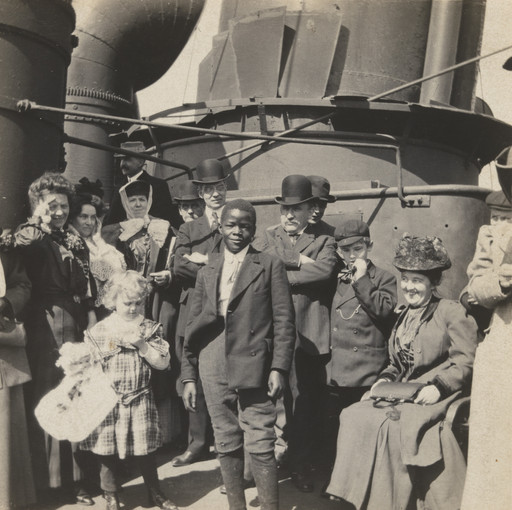
(photos of lost of people - not all necessarily ready for the photo to be taken)


(snapshots of families)
Despite vernacular photography is a very old photographic style, it became most accepted/popular in the 2000s.
Vernacular photography was first invented in France and England in the nineteenth century by the upper classes when they wanted their picture taken.
The beauty of the photographic style was placing such a colloquial art form in such fine art settings. Artists would often group photos together to suggest a further meaning of images. There was something people liked about the amateur look of the photographic style, with untrained photographers capturing things with an untrained eye.
Knowing that I would have to present in a class setting, I then turned my notes/research into a PowerPoint:
Stages of making the PowerPoint:


- The first thing we did in class is to present our research on vernacular photography. Through doing a group presentation it meant we had to collaborate our research/notes. Something I learned more about was the work of Martin Parr. After presenting we had a group discussion lead by the teacher in which we discussed his work following a viewing of a short documentary on his work. We discussed how his photography made people feel. Things that came up was the idea of the male gaze, the comedic aspect of his work in its truthful sense. As well as this we also discussed the popularity of the photographic style in the modern world because of technology such as phones and their increasing complexity - examples include the rise of the selfie.

- I was unable to present my own presentation due to a lack of communication and organization on my behalf,
- We then went on to do a practical task - this included playing around with the depth of field and other settings, looking at focusing on different objects and their depth of field. In this task, I struggled with focusing the camera, gaining familiarity with the camera itself because I'm used to using a canon camera. Below is an example of an image we took:

- In this session, we also completed a quiz in which we could test our knowledge of photography and the history of it so far. Many of the questions I found challenging, realizing I wasn't yet familiar with the main photographers, we had discussed and matched the name with the photos, however, I was informed of most of the historical information.
- Next in the session, we were given some time to think about the idea of our final project and brainstorm some ideas. Some ideas I thought of were focusing on close up faces/ expressions as well as fashion (something that I'm quite passionate about). Due to my previous experience of this at A-level and it being one of the main focuses of my project meant I was most comfortable with this idea.

week four:
In light of this, I researched into street photography, observing and analyzing any particular images I liked. I especially tried to research this photographic style that incorporated the city around me - Brighton. I thought that through my research focusing on Brighton in particular, I would be able to understand how photographers used a city in which I was familiar with it into a form of art.
Photos I found:
What I liked about this photo: The photographer's ability at capturing a very ordinary moment (such as feeding birds) and turning into a form of art. the composition of the pigeons on one section of the photo (and dip in the wall) with the old man in the other provides character and even humor to the photograph. The color pallet remains neutral with greys in the wall and the man's hair with a contrast of darker tones with the pigeons and the man's outfit.
In preparation for this week, we were asked to try and explore street photography. We were given a route to follow and were asked to demonstrate and apply the skills we had to learn from previous weeks. We and other friends from the course decided to complete this practical preparation on Wednesday the 12th of February. We decided that doing it as a group would allow us to collaborate on ideas as well as help each other out if we got lost both geographically and also with the cameras themselves. We also decided to complete this on a weekday as we knew that busy areas we would have to go through such as Churchill shopping center would be less dense. In the class in the previous week, we discussed some issues this task may arise such as people not wanting to be photographed. Doing this at a less busy time would reduce this risk.
However, one issue that we faced in completing the activity was the outbreak of coronavirus and some of the girls felt like completing it would put them at risk with news that there was an increasing amount of cases in Brighton. Despite some girls in our group sending an email to our teacher stating they felt uncomfortable at the task of going into town (a crowded space), it was suggested we still complete this activity. In the end, this task was not able to be completed for the safety of everyone in the group.
Photos I found:
What I liked about this photo: The photographer's ability at capturing a very ordinary moment (such as feeding birds) and turning into a form of art. the composition of the pigeons on one section of the photo (and dip in the wall) with the old man in the other provides character and even humor to the photograph. The color pallet remains neutral with greys in the wall and the man's hair with a contrast of darker tones with the pigeons and the man's outfit.
 What I liked about this photo: The artist's ability to provide us with an angle that allows us to understand the perspective of someone/thing that we otherwise wouldn't have. Suspense is created through the introduction of a character in the background and through the unclear gaze of the dog itself. We are left wondering if the character owns the dog or if the dog is simply staring at a stranger. We are also left mystified as to what the person is doing, shifting our focus onto the centerpiece which is the architecture in the middle with the clouds captured as if they are parting around the building itself. Despite it being furthest away, both the perspective the photo provides us and the weather demonstrates almost places the building as the center of our attention. The use of black and white is clever in emphasizing the contrast between the three potential focuses of the image.What I like about this photo: The composition of the sun captured just as it's beaming with the light coming from that contrasted with the dark architectural structure of the building we are presented with. Despite us being aware of other people in the photograph, the framing of the people in the center in a romantic pose suggests this is either a posed for a photo or captured very skillfully, with the mystery of the person below leaving us wondering whats in the building itself. The inclusion of the gates almost lining the frame provides the photo with a sense of security. This again feeds into the idea of romanticism.
Core reading:


week five:
'Elevator pitch task': This week's task was going to involve pitching an idea to the class about our main idea that we were wanting to develop as our final project. Due to the issues regarding both the strikes and coronavirus this was unable to happen however I knew to continue to develop my ideas and prepare the material that I would've been expected to present would be useful in the success of my final images/idea.
Before doing so, I know that due to the alterations in the course I would have to use images I had previously taken. In doing so, I reflected on the photos I had taken for my a-level coursework (before any editing had been applied). I thought about the different cultural and social issues I could explore through the images I already have.
The images I had taken which used to reflect on this:


Potential themes: proximity/closeness, color, people, details or euphoria
The elevator pitch task:
A five-minute presentation supported by 3 slides:
the first slide - A research/mapping of inspirational photos and quotes
the second slide - A fifty-word statement
the third slide - one test shot
Drafts of the presentation: I decided to finalize the theme of euphoria
The first slide - Research/ mapping of the presentation:


The second slide - A fifty-word statement:


The third slide - A test shot:


Overall:

week 6/7/8: EUPHORIA:
Week 7 core reading:


Week 8 reading:

Week 9 reading


For my project, I decided upon the theme of euphoria. I believed that this theme was specific enough for it to be reflected in my editing style but general enough to be a theme applicable to all the photos I had already.
One challenged I faced immediately after starting to focus more heavily on independent research for my project was the film euphoria and its domination of the term on places like Pinterest and youtube.


Despite this, I was still determined for this to be the theme of my project.
Research:
 Key information from that article:
- Discusses the artist 'Tom Starley' and how he incorporates euphoria into his work/ editing style
- Some techniques to be noted - using the smudge tool

- I liked this image (although highly edited with less of an emphasis on photographic technique) at its ability to convey a sense of magic, something that I feel is vital in conveying a euphoric theme. The inclusion of elements such as thunder and sun made this image to me captivating and thus something to inspire the editing of my final photos.
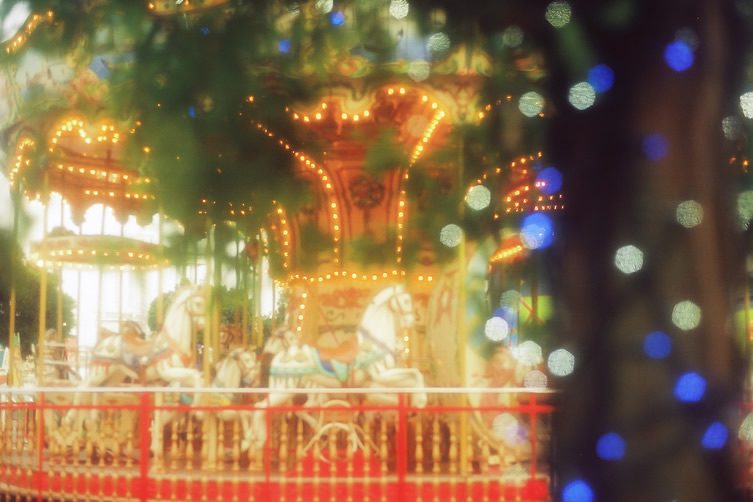
- An image successfully demonstrating how the use of the blur effect (or simply the out of focus nature of the image itself) conveys a euphoric effect. This is also furthered by the contrast of the cool blue lights in the front right of the image with the muted and restricted warm red and yellow color pallet demonstrated in the background. A similar yet more unnoticeable contrast can be seen in the image before as well.
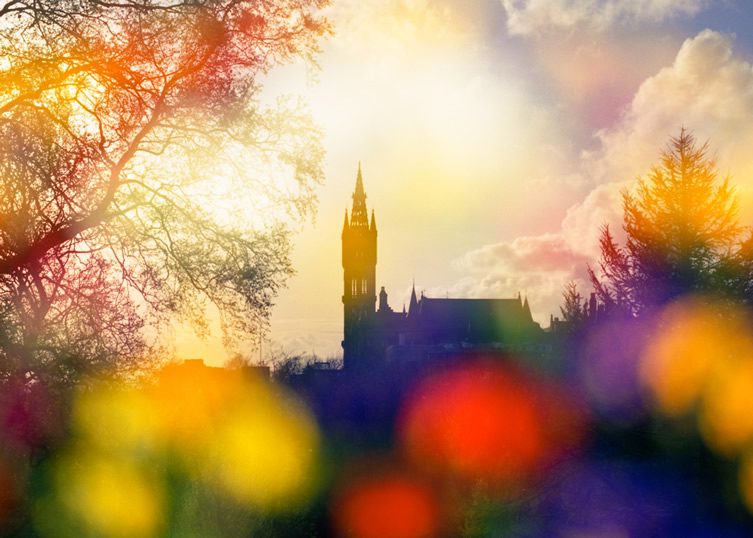
Beginning of editing my final images in a 'euphoric' style:
To me, from what I had gathered (although difficult because of the domination of the popular series on the images/research material) euphoric style editing involved an emphasis on a blur effect, an increase of contrast and saturation. Overall, to me, it came across as a theme that involved an emphasis on emotion and magic.
First attempt at editing to convey the theme of euphoria:
1. Original photo:

2. Edited using the app "colour tone"

3. Edited further using the app "vsco"

3. Playing around with the different overall effects of the image using the app "blur photo"


My favorite overall image after playing around with the editing:

Editing the image further:


Final first image:

The second image (before editing):

1.


1. (unedited)


Critical introduction - planning:


- the plan is: Use the 250 words and divide it into three main points. WHAT were you asked to do, WHY did you do what you do (think about its political relevance too) and HOW did you do what you did (editing apps and Softwares, etc plus developing initial thoughts and the whole creative process)
First draft:
(WHAT) - Our modified project brief was to create a photographic series based on a theme we wanted to explore and deemed appropriate. Challenged through the restriction of using pre-existing images due to the pandemic happening at the time, I knew the theme I was going to chose had to encompass the photographic style of the collection of images I had pre-prepared whilst having a level of political or cultural relevance. As well as this, we were asked to elaborate and explore ideas through a process log, demonstrating a level of understanding of the importance of research in the editing process and thus the final product.
(WHY) - For my project, I decided to choose the theme of Euphoria. An appropriately broad theme allowing me to creatively explore how a noun symbolizing a state of extreme happiness could be demonstrated through imagery, exemplified through editing techniques conforming to styles of images I had researched in the process, such as notable levels of blur and saturation.
(HOW) Comfortable with mobile editing software such as the likes of ‘VSCO cam’ and ‘photoblur’ as well as the basic photo editing software that came with both my iPhone and laptop allowed me to have the maximum effect with programs I was already familiar with. Despite having this comfort, I was challenged to explore abstract styles I would otherwise have looked past as well as having to demonstrate a level of adaptability when it came to an adjusted project brief - a skill not only helpful for work in my course but also in my career later on.
Second draft:
Our modified project brief was to create a photographic series based on a theme we wanted to explore and deemed appropriate. Challenged through the restriction of using pre-existing images due to the pandemic happening at the time, I knew the theme I was going to choose had to encompass the style of photographic images I had available whilst having a level of political or cultural relevance. As well as this, we were asked to elaborate and explore ideas through a process log, demonstrating an understanding of the importance of research in the editing process and therefore the final product.
For my project, I decided to choose the theme of Euphoria. An appropriately broad theme allowing me to creatively explore how a noun symbolic of extreme happiness could be demonstrated through imagery. Exemplified through editing techniques conforming to styles of images I had researched in the process, such as notable levels of blur and saturation. it also seemed narrow enough for the images displayed to reflect it over others. I believed the theme also demonstrated a certain level of relevancy. Completing the project in a universally unsettling and traumatic time, I thought to focus on happiness helped to emphasise not only this project as a creative escape, but media for people in general.
Comfortable with mobile editing software such as the likes of ‘VSCO cam’ and ‘Blurphoto’ as well as the basic photo editing software that came with both my iPhone and laptop allowed me to have the maximum effect with programs I was already familiar with. Despite having this comfort, I was challenged to explore abstract styles I would otherwise have looked past as well as having to demonstrate a level of adaptability when it came to an adjusted project brief - a skill not only helpful for work in my course, but also in my career later on.
Third draft:
Our modified project brief was to create a photographic series based on a theme we wanted to explore and deemed appropriate. Challenged through the restriction of using pre-existing images due to the pandemic happening at the time, I knew the theme I was going to choose had to encompass the style of photographic images I had available, whilst having a level of political or cultural relevance. As well as this, we were asked to elaborate and explore ideas through a process log, demonstrating an understanding of the importance of research in the editing process and therefore the final product.
For my project, I decided to choose the theme of Euphoria. An appropriately broad theme allowing me to creatively explore how a noun symbolic of extreme happiness could be demonstrated through imagery. I thought this was successfully exemplified through editing techniques conforming to styles of images I had researched in the process, such as notable levels of blur and saturation. it also seemed narrow enough for the images displayed to reflect it over others. I believed the theme also demonstrated a certain level of relevancy. Completing the project in a universally unsettling and traumatic time, I thought to focus on happiness helped to emphasise not only this project as a creative escape, but recognising that is what media created for people in general.
Comfortable with mobile editing software such as the likes of ‘VSCO cam’ and ‘Blurphoto’ as well as the basic photo editing software that came with both my iPhone and laptop allowed me to have the maximum effect with programs I was already familiar with. Despite having this comfort, I was challenged to explore abstract styles I would otherwise have looked past as well as having to demonstrate a level of adaptability when it came to an adjusted project brief - a skill not only helpful for work in my course, but also in my career later on.
Fourth draft:
Our modified project brief was to create a photographic series based on a theme, we wanted to explore and deemed appropriate. Challenged through the restriction of using pre-existing images due to the pandemic happening at the time, I knew the theme I was going to choose had to encompass the style of photos I had readily available, whilst having a level of political or cultural relevance. As well as this, we were asked to elaborate and explore ideas through a process log, demonstrating an understanding of the importance of research in the editing process thus the final product.
For my project, I decided on the theme of Euphoria. An appropriately broad theme that I believe allowed me to creatively explore how a noun symbolic of extreme happiness could be demonstrated through imagery. I thought the theme was successfully conveyed through editing techniques I had researched in the process, such as notable levels of blur and high levels of saturation. It also seemed narrow enough for the images displayed to reflect it over others. I believed the theme also demonstrated a certain level of relevancy. Completing the project in a universally unsettling and traumatic time, I thought to focus on happiness helped to emphasise not only utilising this project as a creative escape but recognising it as something media provides people with in general.
Comfortable with mobile editing software such as the likes of ‘VSCO cam’ and ‘Blurphoto’ as well as the basic photo editing software that came with both my iPhone and laptop allowed me to have the maximum effect with programs I was already familiar with. Despite having this comfort, I was challenged to explore an array of abstract styles I would otherwise have looked past as well as having to demonstrate a level of adaptability when it came to an adjusted project brief - a skill not only helpful for work in my course, but also in my career later on.
- Sent to the teacher for review: The main issue is the word count/ trying to reduce the sense of 'waffle'
Feedback:

I decided to leave my critical introduction for a while, giving time to reflect and asses what I could improve on/the unnecesary words. I decided to then focus on the presentation we were asked to do as a component of one of our final submissions.
The task:

I decided to choose a presentation focusing on landscape photography:


Final presentation:

After finishing the presentation, I then resumed editing the rest of my images:
The next image:
unedited:

Edited:

Next unedited picture:

Edited:

Unedited:

Edited:

For this, I decided to send them 3 or 4 of my final images and ask them whether I thought the theme was reflected in the photo successfully and more generally, some feedback on the images:

After finishing the presentation, I then resumed editing the rest of my images:
The next image:
unedited:

Edited:

Next unedited picture:

Edited:

Unedited:

Edited:

- A challenge I faced: Despite being lucky enough to play around with a series of images from the same shoot that I was confident in, I was still limited. After editing 5 pictures that I believed were of a standard I was happy with, I then ended up having to include the one above of which I wasn't due to its inherent out of focus nature and lack of clear expression. However, due to the styles of images being undefined and blurry in nature it meant that it still conformed to the style I chose to demonstrate.
For this, I decided to send them 3 or 4 of my final images and ask them whether I thought the theme was reflected in the photo successfully and more generally, some feedback on the images:
- Shannons feedback: "This successfully conveys the theme of euphoria due to the use of colors. You highlight different camera angles and lighting, adding both blurred and in detail modes within your work overall reflecting the mood and setting of your work correctly"
- Gabbi's feedback:
Comments
Post a Comment